The Power of Community – Why We Need Each Other to Succeed
Research shows social support increases weight loss by 20% and reduces relapse risk. Social isolation is as dangerous as smoking. You don't have to make the journey alone.
Author: Georgios Gultidis
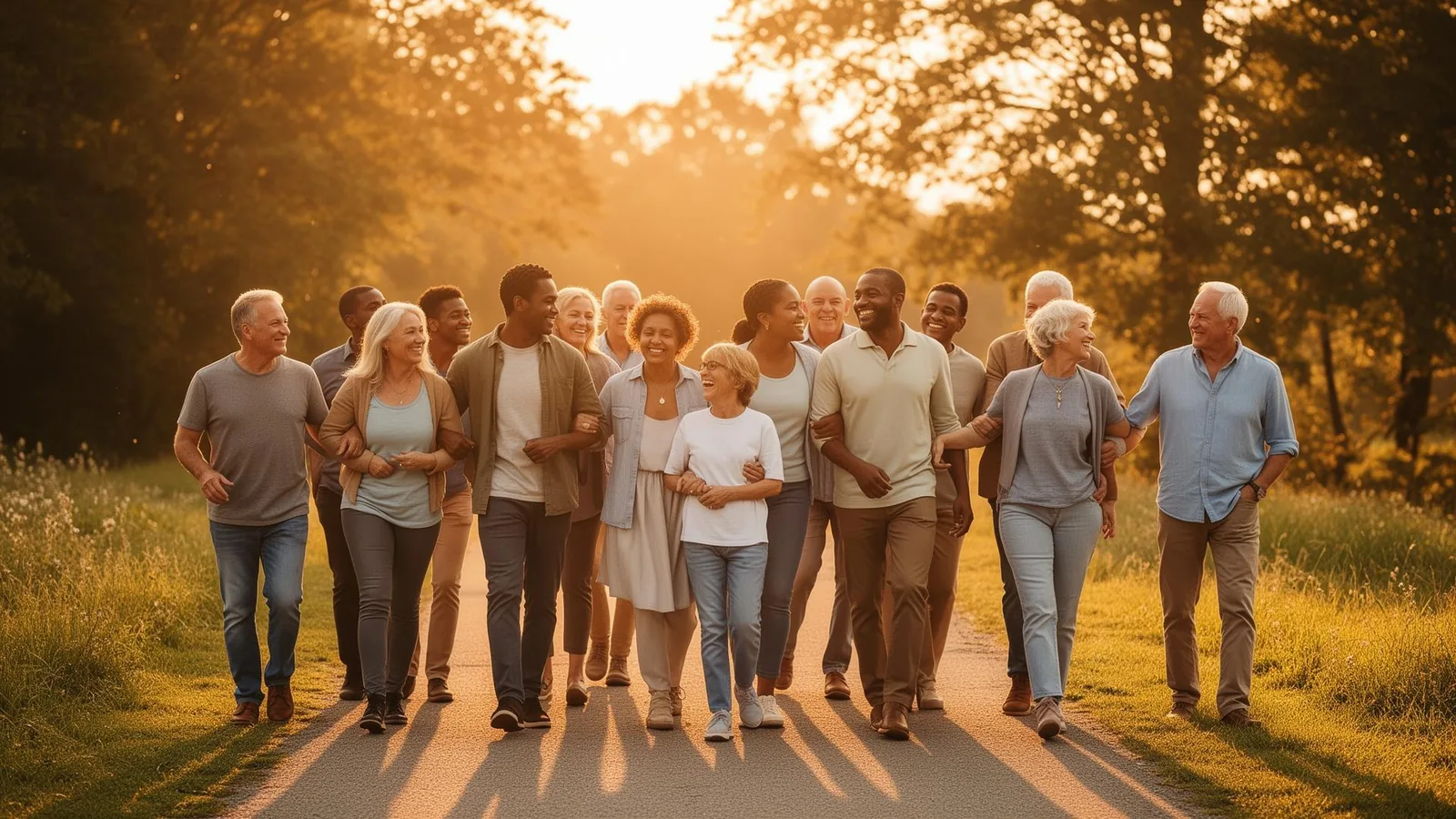
We are biologically programmed for community. Our ancestors survived in groups – isolation meant death. Today we know that social connection affects everything from hormones to immune system to our ability to change our habits.
During my heaviest years, I isolated myself. Shame kept me away from people. I didn't know then that isolation was part of what kept me trapped in darkness.
The Science: Why Community Is Crucial
A groundbreaking study published in PLOS Medicine (2010), analyzing data from 308,000 participants, showed that social relationships affect lifespan as much as smoking, alcohol, and physical inactivity.
Social isolation:
- Increases risk of premature death by 26%
- Raises inflammation markers in blood
- Impairs immune function by up to 20%
- Increases cortisol levels and chronic stress
Social Support and Weight Loss
A meta-analysis in Obesity (2017) of 24 studies showed that people with social support:
- Lost 20% more weight than those without support
- Had 50% lower risk of relapse after weight loss
- Reported higher motivation and better self-esteem
- Maintained weight loss longer over time
Research in International Journal of Obesity (2018) showed that group-based weight loss programs were 42% more effective than individual programs.
The Isolation of Shame
Shame drives us to hide. We believe we're alone with our problem – that no one understands.
A study in Eating Behaviors (2019) showed that weight-related shame:
- Increases emotional eating by 64%
- Decreases likelihood of seeking help by 47%
- Reinforces negative thought patterns and depression
But research also shows that shared shame decreases in intensity. When we tell someone and are met with understanding – not judgment – shame begins to dissolve.
"Social Contagion" – We're Influenced by Those Around Us
A fascinating study published in New England Journal of Medicine (2007) followed 12,067 people over 32 years and discovered:
- If your friend becomes overweight, your risk increases by 57%
- If your partner becomes overweight, your risk increases by 37%
- If your sibling becomes overweight, your risk increases by 40%
But this works both ways – positive health habits also spread. Surrounding yourself with people who support your goals dramatically increases your chance of success.
Different Forms of Support
1. Emotional Support
- Someone who listens without judging
- Encouragement when things are hard
- Validation of feelings and experiences
2. Practical Support
- Exercise buddy who holds you accountable
- Family who adapts meals
- Colleagues who respect your choices
3. Informational Support
- Share experiences and strategies
- Learn from others' successes and mistakes
- Tips and resources
4. Sense of Community
- Knowing you're not alone
- Sharing the journey with others in the same situation
- Group dynamics that motivate
How to Build Your Support Network
Start with one person: You don't need to tell everyone. Start with one person you trust. Research shows that a single supportive relationship can make a difference.
Seek like-minded people: Group programs, online communities, or local groups for people with similar goals. Studies show group participation increases success by 30%.
Be open with loved ones: Tell family and friends about your goals. When they understand, they can support instead of (unintentionally) sabotage.
Accept help: Many of us struggle to receive support. But accepting help isn't weakness – it's wisdom.
My Journey Included Others
I tried for years to do it alone. It didn't work. It wasn't until I dared to open up – first to one person, then to more – that something changed.
I discovered I wasn't alone. That others understood. That community gave strength I couldn't create myself.
When I write this book, it's to create that community for you. You who read this – you are not alone. Your struggle is not unique, even if it feels that way.
Nothing is impossible. But we don't have to do it alone. Together we are stronger. And the strength you seek might be in the person walking beside you.
References
-
Holt-Lunstad J, et al. "Social relationships and mortality risk." PLOS Medicine, 2010. DOI: 10.1371/journal.pmed.1000316
-
Christakis NA, Fowler JH. "The spread of obesity in a social network." NEJM, 2007. DOI: 10.1056/NEJMsa066082
-
Kiernan M, et al. "Social support in weight loss." Obesity, 2017. DOI: 10.1002/oby.21872
-
Brown B. "The Power of Vulnerability." brenebrown.com
-
Wing RR, Jeffery RW. "Benefits of social support for weight loss." J Consult Clin Psychol, 1999. DOI: 10.1037/0022-006X.67.1.132