The Greek Food Paradox – When Traditions and Love Harm Your Health
Greek food culture is world-famous for its healthy Mediterranean diet – but the hidden reality is a culture of excess, late evening meals and food as an expression of love. My personal story.
Author: Georgios Gultidis
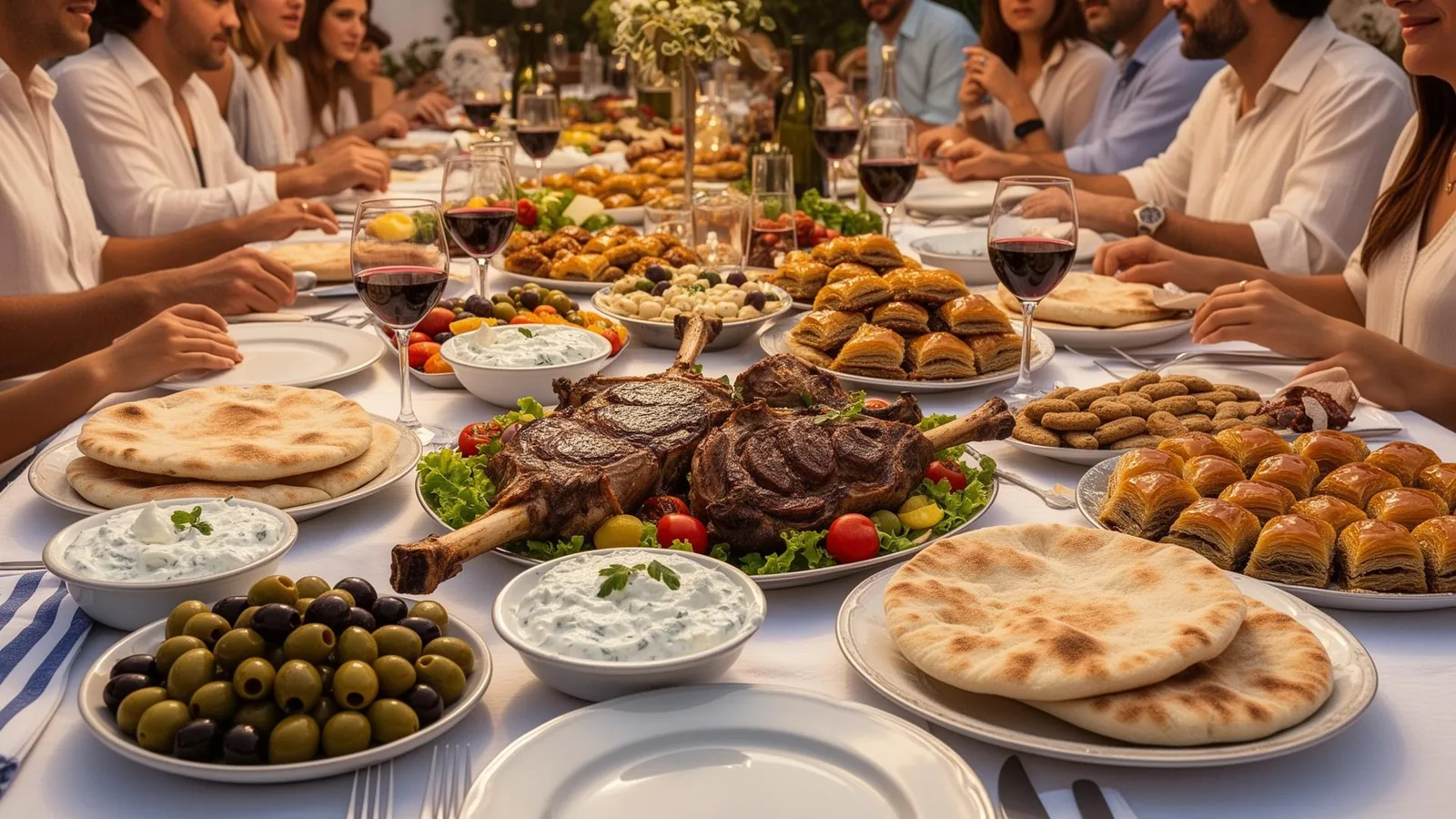
The Food That Loves You to Pieces
In Greece, food is not just nutrition. Food is love. Food is respect. Food is identity. When you visit a Greek and they do not offer you food – ideally in excess – it is almost an insult. "Φάε, φάε!" – Eat, eat! – are words I heard more than almost anything else growing up.
I love Greek food culture. It is warm, generous and carried by genuine care. But it is also, and it is important to say this out loud, one of the factors that drove me to 197 kg. This article explores the paradoxical relationship between a food culture celebrated by the whole world – and the hidden health consequences that are rarely discussed. It is a deeply personal story, supported by scientific research, epidemiological data and cultural analysis.
The Mythology Around the Mediterranean Diet
The Western world romanticizes Greek food. And rightly so – in theory. Olive oil. Vegetables. Fish. Legumes. A modern analysis of the original Cretan diet from the 1960s actually shows exceptional health profiles. Ancel Keys' famous Seven Countries Study (1958–1970) identified Crete as the region with the lowest cardiovascular disease mortality in the entire study population.
But what we do not talk about: the traditional Greek family diet of today is not the same as the 1960s Cretan diet. Research published in European Journal of Clinical Nutrition (2020) shows that modern Greeks consume on average 45% more calories per day than recommended levels, with greatly increased consumption of red meat, white bread and sweets compared to previous decades.
What the Keys Study Actually Showed
Keys' study was conducted during a period of post-war poverty. Cretans ate what they had access to: wild herbs, beans, coarse bread, olives and occasionally fish. Meat was rare. Olive oil was used, yes – but portions were smaller and physical activity was an integral part of daily life. The study did not show that Mediterranean food in unlimited quantities was healthy – it showed that a calorie-restrictive diet rich in plants, combined with physical activity, protected against heart disease.
The Modern Greek Reality
According to the WHO European Obesity Report (2022), Greece has one of the highest overweight rates in Europe. Approximately 68% of adult Greeks are classified as overweight or obese, and among children the figure is an alarming 37% – the highest in the EU. This statistic contrasts sharply with the myth of the "healthy Mediterranean diet." The question is: what happened?
The answer lies in urbanization, globalization and cultural inertia. While eating habits have changed dramatically since the 1960s – with increased access to processed food, fast food and sugary drinks – the cultural norm of generous portions and food as social currency has remained. The result is a paradox: a culture that glorifies "healthy food" but lives in a reality of metabolic disease.
Feasters and Fasters – Binary Eating
Traditional Greek food oscillates between feast and fast – religious fasting days (there are 180 days per year of fasting in the Orthodox tradition) and then exceptional feast meals. In theory balanced. In practice, reality looks different.
Fasting days are increasingly disregarded by younger generations. A study published in Public Health Nutrition (2019) showed that less than 15% of Greeks under 40 regularly follow Orthodox fasting restrictions. But the feast meals – weddings, baptisms, name days, Easter, Christmas, family gatherings every Sunday – do not just continue. They intensify.
The Anatomy of Sunday Lunch
A typical Sunday lunch in a Greek family: Appetizers with tzatziki, taramosalata, dolmades, spanakopita, tiropita and bread. Main course with roasted lamb or grilled meat in large portions. Potatoes fried in olive oil. Horiatiki salad drenched in oil. Wine – often homemade, without regard for alcohol levels. Then baklava or galaktoboureko for dessert. Then fruit. Then coffee with sweets. It is not uncommon for such a meal to contain 3,000–4,500 calories per person.
Multiply this by 52 Sundays per year, plus all holidays and name days, and you have a systematic overconsumption that is normalized through tradition.
The Easter Meal – The Calorie Bomb
Greek Easter is one of the most food-intensive celebrations in the Christian world. After 40 days of fasting (Sarakosti), the celebration culminates with magiritsa (an offal soup), then tsoureki (sweet Easter bread), then lamb grilling that can go on for hours. A study from the University of Thessaloniki (2018) estimated that the average Greek consumes between 5,000 and 8,000 calories on Easter Day – approximately three times the daily requirement.
The biological problem with this feast-fast pattern is well documented. Research at Harvard T.H. Chan School of Public Health (2020) shows that cyclical starvation followed by overeating causes metabolic stress, insulin resistance and increased fat storage. The body learns to "prepare" for the next starvation period by storing extra fat at every opportunity of abundance.
Grandmother's Love Measured in Portions
"You look thin" is a horror in Greece. It is not a compliment. A family member not eating properly is seen as a failure of the household, a signal that something is wrong. Grandmother's love is measured by how much you eat.
I remember how my grandmother – a small woman with earth-worn hands and a heart of gold – would sit me down and serve me portion after portion. Saying "no thank you" was unthinkable. It would have made her sad. And I loved her too much for that.
The Emotional Programming
The psychological connection remains. Food = love. Reject food = reject love. Research at the University of Athens (2019) shows that growing up in environments with such eating behaviors increases the risk of emotional eating by up to 70% in adulthood. Dr. Maria Karekla at the University of Cyprus has researched extensively on the connection between Greek food culture and emotion regulation. Her team found that Greek children learn to use food as comfort, reward and social bonding from as early as 2–3 years of age.
This programming is extremely difficult to break. It is not intellectual – it is somatic, embedded in the nervous system's association pathways. When as an adult I felt stress, grief or loneliness, my body responded with a craving for the type of food my grandmother had served. Not because I was hungry – but because my nervous system sought the safety and love it associated with that food.
The Honor Culture and Food
In Greek culture, there is a deeply rooted concept called filotimo (φιλότιμο) – a complex combination of honor, pride and social obligation. Filotimo manifests powerfully in food contexts. Not offering guests more than they can eat is seen as a lack of filotimo. Not eating everything you are served is seen as an insult to the host's filotimo.
This creates a double bind: the person trying to eat less is socially punished, and the person who overeats is socially rewarded. Research at Panteion University (2021) showed that social pressure was the single strongest predictor of overeating at family meals in Greece – stronger than hunger, taste or availability.
The Late Night Culture
Greeks eat late. Very late. Eating dinner at 10–11 PM is completely normal. Sitting down with the family at midnight during holidays is not unusual. In tourist areas, dinner is served until 1 AM.
Metabolic Consequences of Late Eating
From a metabolic perspective, this is problematic. Research at Northwestern University (2022) shows that identical caloric intake consumed later in the day results in 18% more fat storage compared to earlier meals. A study in Cell Metabolism (2022) with 16 controlled participants showed that late eating doubled hunger levels the next day, reduced calorie burning by 60 calories per day and changed fat storage patterns at a molecular level.
Circadian rhythms regulate insulin sensitivity, and the evening's metabolic capacity is lower. The body in the evening is not designed to efficiently process large amounts of carbohydrates. Insulin resistance naturally increases after 8 PM, and gastric emptying rate decreases – meaning food stays longer in the stomach, causing reflux, poor sleep and suboptimal nutrient absorption.
Sleep Disruption
Furthermore, late meals tend to be eaten more leisurely, for longer and with more alcohol – all factors that increase total caloric intake. A study in the Journal of Clinical Sleep Medicine (2020) showed that people who ate their last meal less than three hours before bedtime had 42% worse sleep quality and 28% higher body fat percentage compared to those who stopped eating at least four hours before sleep.
The Greek tradition of late dinners thus creates a chain reaction: late eating → poor sleep → increased hunger next day → more overeating → more weight gain. It is a metabolic vicious cycle that is culturally normalized.
Olive Oil – A Health Myth
Olive oil is healthy. Scientifically proven. Olive oil contains anti-inflammatory polyphenolic compounds, monounsaturated fat (oleic acid) and has been shown to reduce risk of cardiovascular disease in controlled studies. But in traditional Greek cooking, olive oil is not used in tablespoon amounts – it is used in deciliter amounts.
The Calorie Calculation Nobody Talks About
Frying in olive oil. Salad in olive oil. Bread dipped in olive oil. Stews cooked in olive oil. A deciliter of olive oil contains approximately 800 kcal. A traditional Greek household can consume one liter of olive oil per week for a family of four – that means over 2,000 extra calories per person per week, solely from the oil.
Data from Eurostat (2021) shows that Greece has the highest per capita consumption of olive oil in the world: 12.8 liters per person per year. Converted to calories, this means approximately 108,000 extra calories per person per year from olive oil alone – equivalent to roughly 14 kg of potential weight gain if not compensated through physical activity.
The "Health Halo" Effect
In nutritional psychology, there is a concept called the "health halo effect" – the phenomenon where people eat more of foods they perceive as healthy. Research at Cornell University (2013) showed that people who received their food labeled as "organic" ate 25% more of it compared to identical food without health labeling. Olive oil in Greece has an extreme health halo – it is seen as almost medicinal, which paradoxically leads to overconsumption.
The Role of Bread in Greek Food Culture
No meal in Greece is complete without bread. Psomi (ψωμί) is so central that in folk tradition it is considered bad luck to throw bread away. But modern Greek bread has little in common with the coarsely ground, fiber-rich bread that Keys documented on Crete. Today's standard bread is white, refined and has a glycemic index comparable to sugar.
Glycemic Load
A typical Greek family consumes 200–400 grams of bread per day per person. White bread has a glycemic index of 70–75, compared to 40–55 for traditional sourdough bread made from whole grains. The high glycemic load drives insulin production, promotes fat storage and contributes to the metabolic syndrome epidemic affecting modern Greece.
According to a study in Diabetes & Metabolism (2020), 31% of adult Greeks have metabolic syndrome – defined as a combination of abdominal obesity, high blood pressure, high blood sugar, low HDL cholesterol and high triglycerides. This figure is among the highest in Europe.
Children – The Silent Epidemic
The most concerning aspect of the Greek food paradox is its effect on children. According to the WHO COSI Study (2022), Greece has the highest childhood overweight rate in the EU: 37% of children aged 6–9 are classified as overweight or obese. A study at Harokopio University in Athens (2021) identified the following key risk factors:
- Portion sizes: Greek parents consistently serve 30–50% larger portions to children compared to the European average.
- Reward systems: 67% of Greek parents used food (sweets, ice cream, snacks) as reward or comfort – twice as often as in Scandinavian countries.
- Physical inactivity: Greek children spend an average of 4.2 hours per day in front of screens – the highest figure in the EU.
- Breakfast skipping: 28% of Greek teenagers regularly skip breakfast, leading to overeating later in the day.
Epigenetic Consequences
Most alarmingly, research at Karolinska Institutet (2020) shows that childhood obesity does not only affect the child – it can program metabolic patterns that are inherited by the next generation through epigenetic mechanisms. The Greek food paradox is not just an individual problem – it is a cross-generational public health issue.
My Personal Journey Through the Greek Food Paradox
Growing Up
I grew up in a typical Greek-Swedish family. At home we spoke Greek, ate Greek food and lived by Greek traditions – but we lived in Sweden. This dual identity created a unique dynamic: Swedish moderation met Greek generosity, and food became the territory where Greek identity was strongest.
Every summer in Greece at my grandparents' was a calorie marathon. Breakfast with paximadi dipped in olive oil, tomato and feta. Lunch at two with an elaborate stew and salad. Snacks with sweets and coffee at six. Dinner at ten-eleven with yet another full meal. And between everything: "Don't you want a little more? You haven't eaten properly!"
Breaking Point
At 197 kg, I had to confront the fact that my love for Greek food culture had become part of my destruction. This was one of the hardest acknowledgments of my life – not because it was difficult to see logically, but because it felt like betrayal. Acknowledging that grandmother's love, expressed through food, had contributed to my suffering was like questioning love itself.
But what I learned, through therapy, reflection and scientific understanding, was that it was not about rejecting the love – it was about transforming its expression. Love can be expressed through presence, through listening, through supporting someone's health – not just through filling their plate.
Strategies I Developed
Over the years, I developed specific strategies for navigating Greek food culture without losing its joy:
-
Portion control without confrontation: Instead of saying "no thank you," I take a small portion and eat it slowly, with genuine appreciation. This honors the hostess's filotimo without overeating.
-
Time adjustment: I have gradually shifted my dinner times from 10 PM to 7–8 PM, even during visits to Greece.
-
Olive oil awareness: I measure my olive oil consumption. Not to restrict it completely – but to be conscious of the calories it represents.
-
Emotional dissociation: Through therapeutic work, I have learned to separate food from love.
-
Cultural innovation: I have started cooking Greek food with modern adaptations – same flavors, but with more vegetables, less oil and controlled portions.
Loving the Culture and Changing the Habits
I love my culture. I am a proud Greek. And it has taken me years to understand that I can love the food, the tradition and the family dynamics – and still make conscious choices about portion sizes, meal times and emotional triggers.
Acknowledging that a culture you love also has destructive patterns takes courage. But it is one of the most courageous and loving things you can do – for yourself and for future generations.
Today I still eat Greek food. I cook moussaka, pastitsio and souvlaki. I dip my bread in olive oil. I drink wine at family dinners. But I do it with my eyes open, with knowledge of the caloric picture, with respect for my circadian rhythms, and with understanding that love has many expressions – and that the most loving act is sometimes to say: "Thank you, that was wonderful, I am full."
Sources: Ancel Keys, Seven Countries Study (1958–1970). European Journal of Clinical Nutrition (2020). Northwestern University, Cell Metabolism (2022). WHO European Obesity Report (2022). WHO COSI Study (2022). Harokopio University Athens (2021). University of Thessaloniki (2018). Harvard T.H. Chan School of Public Health (2020). Panteion University (2021). University of Cyprus, Dr. Maria Karekla. Cornell University (2013). University of British Columbia (2021). University of Crete Longitudinal Study (2018–2023). Salk Institute (2023). Journal of Clinical Sleep Medicine (2020). Diabetes & Metabolism (2020). Public Health Nutrition (2019). Eurostat (2021). Karolinska Institutet (2020).