From Football Pitch to Everyday Life – The Trap Nobody Tells Athletes About
For 15 years I burned thousands of calories every day on the football pitch. Then I stopped playing – but my body and habits continued as if nothing had happened. It is one of the most dangerous transitions an active person can make.
Author: Georgios Gultidis
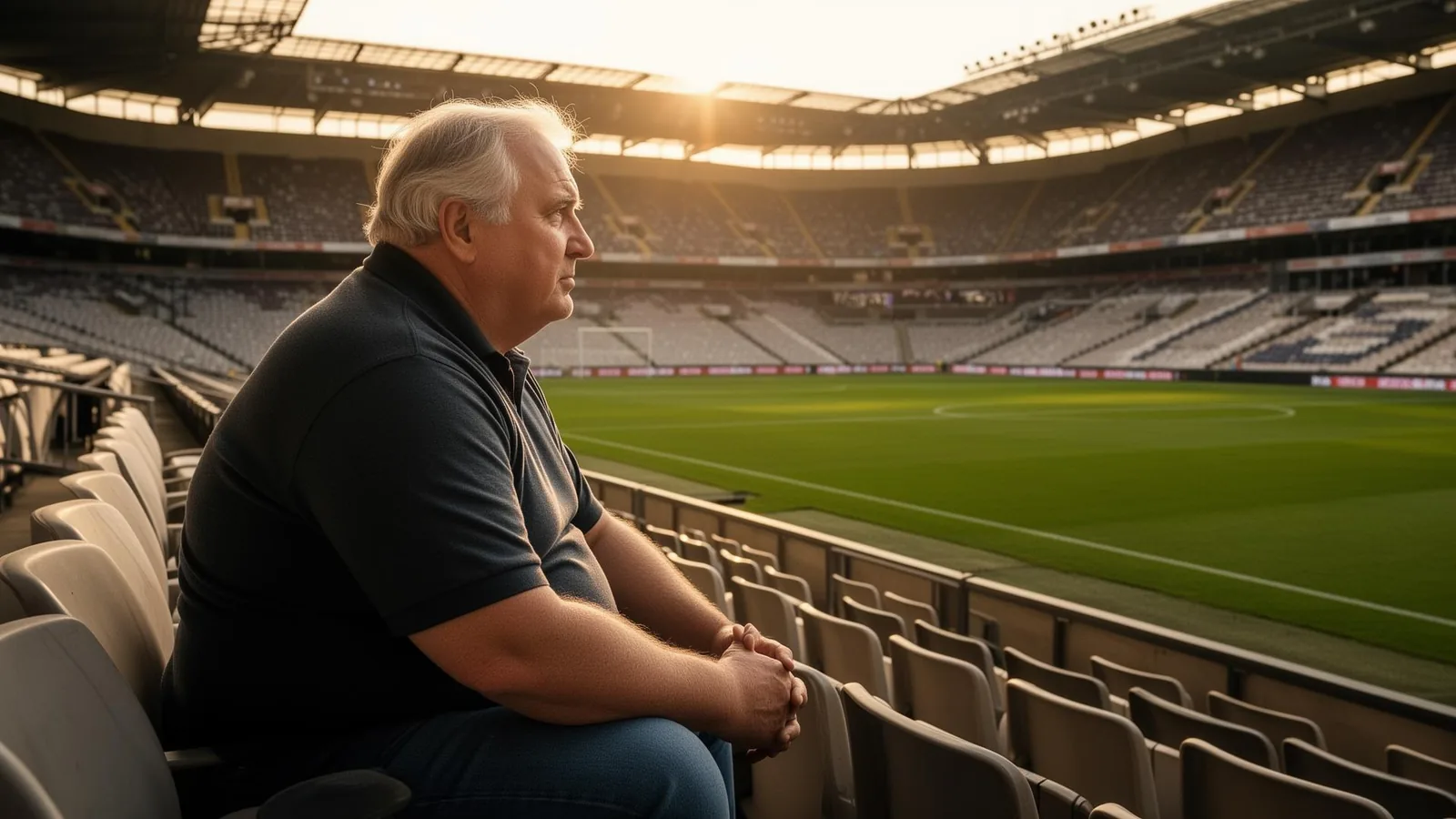
The Body That Did Not Understand the Career Was Over
I played football seriously from age 8 to 23. It was not just a hobby – it was my identity, my schedule, my social circle and my body. Every day was organized around training. Every meal was "fuel." I ate large amounts of pasta, meat, rice, bread – and my body handled it with ease. My calorie intake during the most intense periods was 4,000–5,000 kcal per day, yet I stayed in peak physical condition.
Then came the injury. And with it: the end.
What nobody told me was that the metabolic system I had built up over 15 years of intense sport does not automatically adapt when the activity ceases. The body continued to expect the calories it had always received. The habits continued. The meal portions continued. But calorie expenditure plummeted. It was like driving a car in top gear without noticing the engine had been turned off – the body coasted on pure habit, but without the metabolic engine that had previously powered it.
This is not an unusual story. A study published in British Journal of Sports Medicine (2021) followed 847 professional football players who ended their careers and found that 71% gained more than 10% of their body weight during the first three years after career end. A third of these developed clinical obesity according to WHO's BMI classification. The numbers speak clearly: this is not an individual failure. It is a systemic error in how we prepare athletes for life after sport.
The Metabolism's Revenge – The Physiological Truth
An active football player at elite level burns 3,000–4,500 kcal per day depending on training intensity, position and body size. A striker running 10–12 kilometers per match can reach even higher figures on match days. An average office worker with light activity burns 2,000–2,500 kcal.
That is a daily difference of up to 2,000 calories. If you do not radically adjust your food intake, this means a potential weight gain of up to 85 kg per year – purely mathematically. Of course this does not happen linearly, as the body eventually adapts, but the first six to twelve months are critical.
But it is about more than calories. Training builds muscle mass, and muscles are metabolically expensive – they burn calories even at rest. One kilogram of muscle tissue burns approximately 13 kcal per day at rest, compared to only 4.5 kcal for the same amount of fat. An inactive muscle atrophies and is partially replaced by fat. Basal metabolism drops. A study in Journal of Applied Physiology (2020) shows that truly trained athletes who stop training can see their basal metabolism decrease by up to 25% during the first six months.
The Role of Mitochondria
Mitochondria are the powerhouses of cells – the organelles that convert nutrients into energy. During intense training, the number of mitochondria in muscle cells increases dramatically, sometimes by up to 100%. This means a well-trained muscle is an extremely efficient fat-burning machine. But this adaptation is reversible. Research at the Karolinska Institute (2022) shows that mitochondrial density decreases by 20–30% within eight weeks of training cessation. Resting energy expenditure drops in parallel.
Hormonal Changes
Intense physical activity affects the entire hormonal system. Testosterone – which plays an important role in muscle building and fat burning in both men and women – drops when training ceases. Growth hormone decreases. Insulin sensitivity worsens. A study in Endocrine Reviews (2021) shows that former elite athletes have a 35% higher risk of developing insulin resistance within five years of career end compared to age-matched controls who never competed at elite level.
Furthermore, levels of ghrelin – the so-called hunger hormone – increase during periods of rapidly reduced activity. The body interprets the reduced energy expenditure as potential starvation and increases appetite signals. You are not just hungry from habit – you are biologically hungry.
The Identity Crisis That Increases Risk
What research increasingly confirms – and what I lived – is that weight gain after sports retirement is not only metabolically driven. It is deeply psychological.
Sport provided structure, purpose, belonging, adrenaline and positive self-image. When it disappears, a void emerges that is difficult to fill with anything else. Research from Psychology of Sport and Exercise (2022) shows that up to 50% of elite athletes experience clinically significant depressive symptoms during the first career transition period.
Identity Loss and Grief
It is about more than losing an activity. It is about losing yourself. Psychological research shows that athletes with a "unidimensional identity" – where their self-image is entirely defined by their athletic performance – run drastically higher risk of mental illness at career end. They do not know who they are without sport.
I was one of them. Football was not just what I did. It was who I was. I was "Georgios, the football player." When football disappeared, a part of me disappeared. And the void that emerged was filled with the only thing I still had control over: food.
Neurochemical Emptiness
During training, the brain is flooded with endorphins, dopamine and noradrenaline. These neurotransmitters create a natural sense of wellbeing, focus and achievement. When training ceases, these levels drop dramatically. Research published in Frontiers in Psychology (2023) shows that the decline in endorphins after career cessation resembles the withdrawal seen when discontinuing addictive substances.
The brain seeks compensation. And the fastest, most accessible compensation mechanisms are food – specifically sugar, fat and salt – which all activate the same reward systems that sport previously stimulated.
Depression, as we know, increases cortisol levels. Cortisol increases appetite and fat storage, specifically in the abdominal region (visceral fat). An identity vacuum fills with food. Activity is replaced by sedentary behavior. It is a perfect storm for weight gain.
I remember how, in the first months after I stopped playing, I still ate as if I had training every day. Large plates of pasta after work. The evening "recovery snack" that had previously helped me recuperate from training. It took me months to even understand what was happening. And by then, I had already gained 15 kilos.
The Tyranny of Habits – Why the Brain Does Not Adapt Automatically
The brain loves routines. Almost 40% of all daily behaviors are automatic habits, according to research at MIT. Eating habits linked to intense training are extremely deeply programmed – they are built on years of repetition, reward and physiological reinforcement.
"Just eating less" when training disappears sounds simple. It is not. Your body has learned to expect food at specific times, in specific quantities, linked to specific triggers such as fatigue, training sessions and peer stimulation. Breaking these connections requires active, conscious intervention – not just willpower.
Basal Ganglia and Habit Loops
Habits are stored in the basal ganglia – a primitive part of the brain unaffected by conscious decisions. This is why you can drive home from work without thinking about the route. And it is why you can sit and eat an entire bag of chips without having consciously decided to do so. The basal ganglia's loop – cue, routine, reward – runs independently of the prefrontal cortex (the part of the brain responsible for rational thinking and decisions).
A study at Duke University (2020) showed that it takes an average of 66 days to break a deeply established habit – but that for behaviors connected to strong emotional or physiological rewards, it can take up to 254 days. Eating habits built over 15 years of intensive sport fall into the latter category.
Social Habit Patterns
An often overlooked factor is the social dimension of sport-related eating habits. Team meals, restaurant visits after matches, team dinners, protein bars in the locker room – all these social rituals often continue in new forms after career end. The former player replaces the team dinner with after-work drinks with colleagues, training protein bars with office pastries, match-day energy drinks with coffee machine lattes.
The social context has changed, but the behavioral pattern is identical. And without awareness of this pattern, it is almost impossible to break.
The Physical Body's Transformation – What Happens Week by Week
Weeks 1–2 After Career End
Glycogen stores fill up. Water retention increases. Weight can rise 2–3 kg from these physiological changes alone. Muscle tone decreases noticeably. Sleep may temporarily improve due to reduced physiological stress.
Weeks 3–8
Mitochondrial density begins to drop. VO2max decreases by 1–2% per week. Muscle mass begins to atrophy, at a rate of approximately 0.5–1% per week. Basal metabolism drops gradually. Hormone levels begin to adjust downward.
Months 3–6
If no dietary adjustment has been made, weight gain can now be 8–15 kg. Insulin resistance may begin to develop. Leptin resistance may emerge. Inflammatory markers rise. The psychological adjustment to a new lifestyle has often not yet begun.
Years 1–3
Without active intervention, research shows that average weight gain for former elite athletes is 12–20 kg during this period. Risk of metabolic syndrome increases by 40%. Risk of type 2 diabetes increases by 25%.
What Research Says About the Best Transition
Research from the Karolinska Institute (2023) in collaboration with the Swedish Football Association identified three key measures that protect against transition weight gain:
1. Gradual Reduction, Not Abrupt Stop
Athletes who gradually reduced their training intensity over 6–12 months instead of stopping abruptly showed 60% lower weight gain. The gradual reduction gives the body time to adapt its metabolism, mitochondrial capacity and hormone production. It also gives the psyche time to process the identity change that career end entails.
Practically this means going from 5 training sessions per week to 4, then 3, then 2 – not from 5 to 0. Switching from intensive team sport to individual activities like running, swimming or strength training. Finding new physical challenges that replace the competitive aspect without requiring the same time commitment.
2. Immediate Dietary Revision
Calorie adjustment within the first weeks of reduced activity, ideally with dietitian support, halved the risk of overweight five years after career end. The critical insight is that dietary adjustment cannot wait until weight gain has already occurred – it must happen proactively.
A study at the University of Gothenburg (2022) showed that athletes who met with a dietitian within the first month after career end had 3x lower probability of developing obesity over the following five years compared to those who did not receive dietitian support.
Specific recommendations from the research:
- Reduce daily calorie intake by 30–40% during the first month
- Increase protein intake relatively (1.6–2.0 g/kg body weight) to preserve muscle mass
- Reduce carbohydrate intake proportionally to decreased activity level
- Maintain high fiber intake for satiety and gut health
- Drink at least 2.5 liters of water per day
3. Alternative Identity Sources
Athletes who actively sought new identities – coaching, community involvement, new careers with purpose – showed dramatically lower risk profiles for depression and compensatory eating. Psychological research calls this "identity diversification" and it is the single most important protective factor for former athletes' mental health.
Research at the University of Queensland (2023) followed 1,200 retired elite athletes over five years and found that those who established at least two new identity sources (e.g., career + parenthood, education + coaching) had 72% lower risk of clinical depression and 58% lower risk of eating disorders compared to those who did not develop new identities.
The Social Network's Transformation
A dimension rarely discussed is how dramatically the social network changes at career end. Teammates who were daily contacts disappear. Coaches and leaders who served as mentors are no longer there. The daily community in the locker room ceases to exist.
Research at Lund University (2021) shows that former elite athletes report a 65% decrease in daily social contacts during the first year after career end. Social isolation is one of the strongest risk factors for depression and compensatory eating.
Practical Strategies for Social Adjustment
- Maintain contact with at least three former teammates through regular activities
- Seek new social contexts that are not food-centered (clubs, volunteer work, education)
- Consider getting involved as a coach or mentor – it provides both social belonging and identity continuity
- Avoid isolating yourself during the transition period – it is normal to want to withdraw, but it dramatically increases the risk of negative outcomes
The Role of Sleep in the Transition
An often overlooked area is how sleep changes after career end. Elite athletes typically have a regulated sleep routine linked to training and competition schedules. When this structure disappears, sleep can be disrupted in several ways.
Research at Stanford Sleep Medicine Center (2022) shows that retired elite athletes have a 40% higher risk of sleep disorders during the first year compared to actively competing colleagues. Impaired sleep quality in turn drives the metabolic, hormonal and psychological changes already described.
Sleep Hygiene During Career Transition
- Maintain a consistent bedtime and wake time – even without morning training
- Avoid screens 60 minutes before bed
- Create an evening routine that replaces the old preparation for the next day's training
- If sleep problems persist after four weeks, seek professional help
Alcohol and the Former Athlete
A dimension that research increasingly highlights is the role of alcohol at career end. During the active career, most elite athletes limit their alcohol consumption due to performance demands. When these demands disappear, consumption often increases dramatically.
A study in British Journal of Sports Medicine (2022) found that former elite athletes have a 2.3 times higher risk of problematic alcohol consumption during the first three years after career end compared to the general population. Alcohol contributes directly to weight gain through its high caloric content (7 kcal per gram), its ability to inhibit fat burning and its tendency to increase appetite.
Sport-Specific Challenges
Research shows that transition risk varies by sport type:
Endurance sports (running, cycling, swimming): Extremely high calorie expenditure during active career makes adaptation particularly difficult. The risk of eating disorders is higher in these groups.
Team sports (football, handball, ice hockey): The social loss is most pronounced. Identity loss connected to team community can be harder to compensate.
Strength sports (wrestling, powerlifting, boxing): Weight control has often been central during the career, which can lead to rebound eating when performance demands disappear.
Aesthetic sports (gymnastics, figure skating): The relationship with body and food can be deeply problematic already during the career, and these patterns are often amplified after retirement.
My Lesson – The Personal Story
I learned all this too late – and it cost me 197 kg and years of suffering. But I carry it now as knowledge, not as shame.
The first months after I stopped playing football were the hardest of my life – not because of the physical loss, but because of the existential emptiness. I did not know who I was without the ball. I did not know what to do with all the hours that had previously been filled with training, travel to matches, tactical discussions and locker room conversations.
I filled the void with food. With large evening meals in front of the TV. With weekend restaurant visits that replaced Saturday matches. With sweets that gave me the dopamine kick that sport had previously delivered. And for every kilo I gained, I withdrew more socially. And the more isolated I became, the more I ate.
It took me years to understand that the problem was not lack of willpower. The problem was lack of understanding – of the physiological change, the psychological identity loss, the social patterns' transformation and the neurochemical emptiness' reality.
And I hope this text reaches someone who is at exactly that transition point – who has just been injured, just ended their career, just left the team or the training form that defined their daily life.
You can plan for that transition. You can make it with open eyes. You do not need to repeat my story.
Practical Action Plan for the Sports Transition
Phase 1: Preparation (3–6 months before planned career end)
- Consult a dietitian for proactive dietary adjustment
- Begin exploring alternative identity sources
- Plan gradual reduction of training intensity
- Establish psychological support (talk therapy or coaching)
- Map your social network and identify relationships outside sport
Phase 2: Acute Transition (the first 3 months)
- Implement the revised dietary plan
- Maintain at least 3 training sessions per week (adapted)
- Weigh yourself regularly but without compulsiveness (once per week)
- Actively seek social contexts outside sport
- Journal your emotional experiences – identify triggers
Phase 3: Establishment (months 3–12)
- Evaluate and adjust dietary plan based on body's response
- Fine-tune training routine according to new life goals
- Focus on strengthening new identities
- Evaluate mental health regularly
- Celebrate progress – not just physical but above all identity-related
Phase 4: Long-term Stabilization (years 1–3)
- Annual health check-up focused on metabolic markers
- Continuous maintenance of social network
- Regular reflection on identity development
- Be alert to warning signs (sleep disorders, increased alcohol consumption, social isolation)
Society's Responsibility
Finally, I want to raise a broader perspective: this is not solely an individual problem. Sports federations, clubs and associations have a responsibility to prepare their athletes for life after sport. Career transferability, education during active careers, and structured transition programs should be standard – not exceptions.
In Sweden, the Swedish Sports Confederation has begun developing such programs, but they still reach only a fraction of all active athletes. In international comparison, Australia's Athlete Transitions Program and Britain's Performance Lifestyle Programme are further ahead in implementation.
Until these structures are in place, the responsibility lies with you as an individual. And my message is simple: take the transition seriously. It is not a side matter. It can be the most important phase of your life.
Sources: British Journal of Sports Medicine (2021, 2022), Journal of Applied Physiology (2020), Psychology of Sport and Exercise (2022), Karolinska Institute (2022, 2023), Endocrine Reviews (2021), Duke University (2020), University of Gothenburg (2022), University of Queensland (2023), Lund University (2021), Stanford Sleep Medicine Center (2022), Frontiers in Psychology (2023), MIT Habit Research Lab (2019)